Wood Fence Staining Services in Round Rock, TX
Round Rock Fence Company stains cedar and pine fences throughout Williamson County using oil- and water-based products, including Ready Seal, TWP, and Sikkens. Semi-transparent, semi-solid, and solid-color finishes available. Spring and fall are peak scheduling windows. Veteran-owned and fully insured.
To Receive a Free Estimate
Fill Out This Form
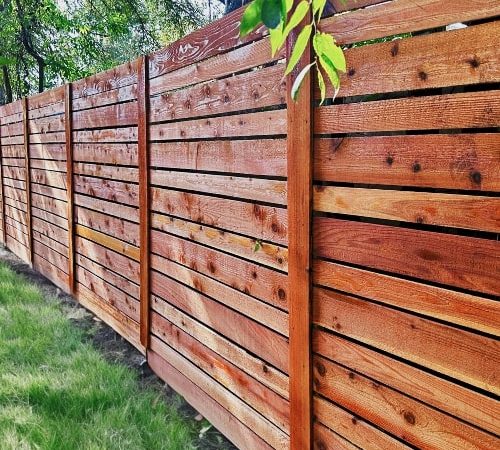
Cedar fencing in Central Texas needs protection. UV exposure, summer heat, and heavy rain all accelerate wood weathering without a proper finish. Round Rock Fence Company stains and seals wood fences across Williamson County using professional-grade products matched to your wood species, fence age, and HOA color requirements. Every staining project starts with a free staining estimate request, so we’ll assess the condition, recommend the right product, and confirm color before any application.
We’ve stained cedar and pine fences across Round Rock, Pflugerville, Hutto, Cedar Park, Leander, and Williamson County since 2012. Staining looks straightforward, but rewards experience in product selection, timing, and application technique. Learn more about our staining crews.
Types of Fence Stain We Apply
Stain products break into three categories based on how visible the wood grain remains.
Semi-Transparent Stain
The most popular choice for cedar fences. Semi-transparent stain adds color tone while preserving the wood grain pattern underneath. It’ll last 2 to 4 years in Central Texas UV before needing a refresh. Best for fences where homeowners want to see the cedar character rather than a painted look.
Semi-Solid Stain
Semi-solid stain provides more color coverage while letting some grain texture show through. The middle-ground option is at 4 to 6 years between applications. Works well on older fences where weathering creates uneven surfaces that semi-transparent won’t fully hide.
Solid Color Stain
Solid color stain covers the grain completely for a near-painted appearance while still allowing the wood to breathe. It’s the longest-lasting option at 6 to 8 years. Often required by HOAs to enforce specific approved color palettes. Good choice when hiding repairs or mismatched board replacements.
Stain Products We Use
We apply professional-grade stain products chosen based on fence condition, climate exposure, and longevity requirements.
Oil-Based Stains
Oil-based products like Ready Seal, TWP, and Sikkens penetrate deep into wood fibers and protect against Central Texas UV. Ready Seal is the workhorse for cedar because it needs no back-brushing and self-levels during application. TWP and Sikkens cost more but offer a wider color range and longer intervals between applications.
Water-Based Stains
Water-based products like Thompson’s and Cabot dry faster and produce less odor during application. They’re a good fit when schedules don’t allow the 24- to 48-hour cure time that oil-based stains need. Water-based finishes typically require more frequent reapplication than their oil-based counterparts on exposed cedar surfaces.
Color Matching and HOA Approval
HOA-governed communities across Round Rock and Pflugerville frequently specify approved fence stain colors in their architectural guidelines. Teravista, Forest Creek, Sendero Springs, and Paloma Lake all maintain approved color lists that residents must follow. We’ll pull the approved colors from your HOA packet, recommend the closest product match, and apply a test section before the full application so homeowners can verify the color in natural light. For communities without restrictions, we’ll walk through product sample boards on-site.
Fence Preparation Before Staining
Preparation matters more than application technique. A well-prepped fence holds stain for years. A poorly prepped one peels in months.
Cleaning
We pressure-wash fences before staining to remove dirt, mildew, pollen, and loose debris. Proper cleaning exposes fresh wood, allowing stain to penetrate rather than sit on contamination. Pressure settings matter because excessive force damages the wood grain.
Old Stain Removal
Fences with failing stain require stripping before a new application. We’ll sand, chemically strip, or power-wash, depending on product and condition. This step takes longer than the staining itself but produces dramatically better results. Skipping it leads to peeling within 12 to 18 months.
Application Technique
We apply stain using a sprayer-plus-back-brush combination for consistent penetration and full coverage. Back-brushing works, pushing stain into the grain and catching drips before they dry. Temperature and humidity affect application choices, so we’ll adjust techniques based on the day’s conditions.
Fence Preparation Before Staining
Preparation matters more than application technique. A well-prepped fence holds stain for years. A poorly prepped one peels in months.
Cleaning
We pressure-wash fences before staining to remove dirt, mildew, pollen, and loose debris. Proper cleaning exposes fresh wood, allowing stain to penetrate rather than sit on contamination. Pressure settings matter because excessive force damages the wood grain.
Old Stain Removal
Fences with failing stain require stripping before a new application. We’ll sand, chemically strip, or power-wash, depending on product and condition. This step takes longer than the staining itself but produces dramatically better results. Skipping it leads to peeling within 12 to 18 months.
Application Technique
We apply stain using a sprayer-plus-back-brush combination for consistent penetration and full coverage. Back-brushing works, pushing stain into the grain and catching drips before they dry. Temperature and humidity affect application choices, so we’ll adjust techniques based on the day’s conditions.
Seasonal Fence Staining Scheduling
Fence staining work follows a distinct seasonal pattern across Round Rock and Williamson County because application conditions matter as much as product choice. Spring (March through May) is the peak staining season. Temperatures stay in the 60s to 80s, humidity moderates after winter dryness, and fences benefit from protection before summer UV peaks. Fall (October through December) is the second peak because temperatures drop back into the comfortable range. Summer staining is possible but is limited to early-morning applications before surface temperatures climb above 90 degrees, which can cause premature drying. Winter staining requires days with temperatures above 50 degrees for at least 24 hours, both during and after application. We’ll book Pflugerville, Hutto, and Round Rock projects within 1 to 2 weeks during peak seasons and 3 to 4 weeks during summer constraint windows.
Timing for Different Fence Ages
New cedar fences need 3 to 6 months of weathering before the first stain, so wood moisture content drops to acceptable levels for product penetration. Fences 1 to 3 years old take stain best and produce the most dramatic visual improvement. Older fences benefit from semi-solid or solid-color products that cover uneven weathering. Post-repair staining is a common pairing. We’ll coordinate staining with wood fence board repair jobs so new board replacements blend into the existing fence color. New construction gets the first stain coordinated with the installing a brand new fence timeline.
Why Round Rock Homeowners Choose Us for Staining
Round Rock Fence Company has been staining wood fences across Williamson County since May 2012. Staining rewards experience that separates quick wash-and-spray work from a job done right: understanding product performance in the Central Texas climate, matching HOA color requirements without revision cycles, and knowing when a fence needs repair before staining. We’re veteran-owned, fully insured, and every staining project includes written product documentation so you know exactly what was applied. Read staining project testimonials.
Related Fence Services
Staining fits into larger project timelines. cedar fence construction and fence condition check complement staining work. When a fence is too weathered to benefit from restaining, full fence rebuild service may be the better investment. Homeowners considering a switch might look at vinyl as a low-maintenance option that needs no staining.
Frequently Asked Questions
What is the ideal staining frequency for Texas wood fences?
Central Texas cedar fences need restaining every 2 to 4 years for semi-transparent finishes, 4 to 6 years for semi-solid finishes, and 6 to 8 years for solid-color finishes. UV exposure drives the schedule more than any other factor. South and west-facing fence runs weather faster than the east- and north-facing sides and may need interim touch-ups on select sections.
What stain products work best on Texas cedar fences?
Ready Seal is the most popular choice for Central Texas cedar because it’s oil-based, self-leveling, and needs no back-brushing. TWP and Sikkens work well for homeowners who want more color options or longer intervals between applications. Water-based products like Thompson’s and Cabot dry faster but typically require more frequent reapplication in full sun on cedar.
Can you blend a new stain finish with a weathered fence?
Partial blending is possible but not always perfect. Semi-solid or solid-color stains blend better than semi-transparent ones because they provide more coverage over weathering differences. We’ll apply a test section before the full application so homeowners can see the finished color in natural light before committing.
When is the best season to stain a fence in Round Rock?
Spring (March-May) and fall (October-December) are the two peak seasons because temperatures are in the 60s to 80s, and humidity is manageable. Summer staining is limited to early-morning applications before surface temperatures exceed 90 degrees. Winter staining requires forecast windows with 24+ hours above 50 degrees.
Do you remove old stain before applying new stain?
Yes, when the existing stain is failing or peeling. We’ll sand, chemically strip, or power-wash, depending on product type and condition. If the existing stain is worn but not peeling, we pressure-wash and apply a new stain on top. The prep decision gets made on-site after assessing the actual fence condition during the estimate visit.
How long should new cedar weather before its first stain application?
New cedar needs 3 to 6 months of weathering before the first stain application, so the wood moisture content drops to acceptable levels. Premature staining traps moisture against the wood, causing the finish to fail early. We’ll schedule staining visits for 4 to 6 months post-installation as a default and adjust based on the weather exposure the fence has received.
Which wood fence finish lasts longer: sealer, stain, or paint?
Clear sealer lasts the shortest, at 1 to 2 years, because UV breaks down unpigmented finishes quickly. Semi-transparent lasts 2 to 4 years. Semi-solid runs 4 to 6. Solid color typically lasts 6 to 8 hours. Paint technically lasts the longest, but it creates maintenance headaches because it seals wood, preventing it from breathing and causing flakes when boards shift.
Request a Fence Staining Estimate
Every staining project starts with a free on-site assessment. We’ll walk the fence, document condition, recommend products and colors, coordinate with HOA requirements, and send a written quote within 24 to 48 hours. Call (512) 236-5154 or book a staining visit. Peak seasons book 1 to 2 weeks out.